
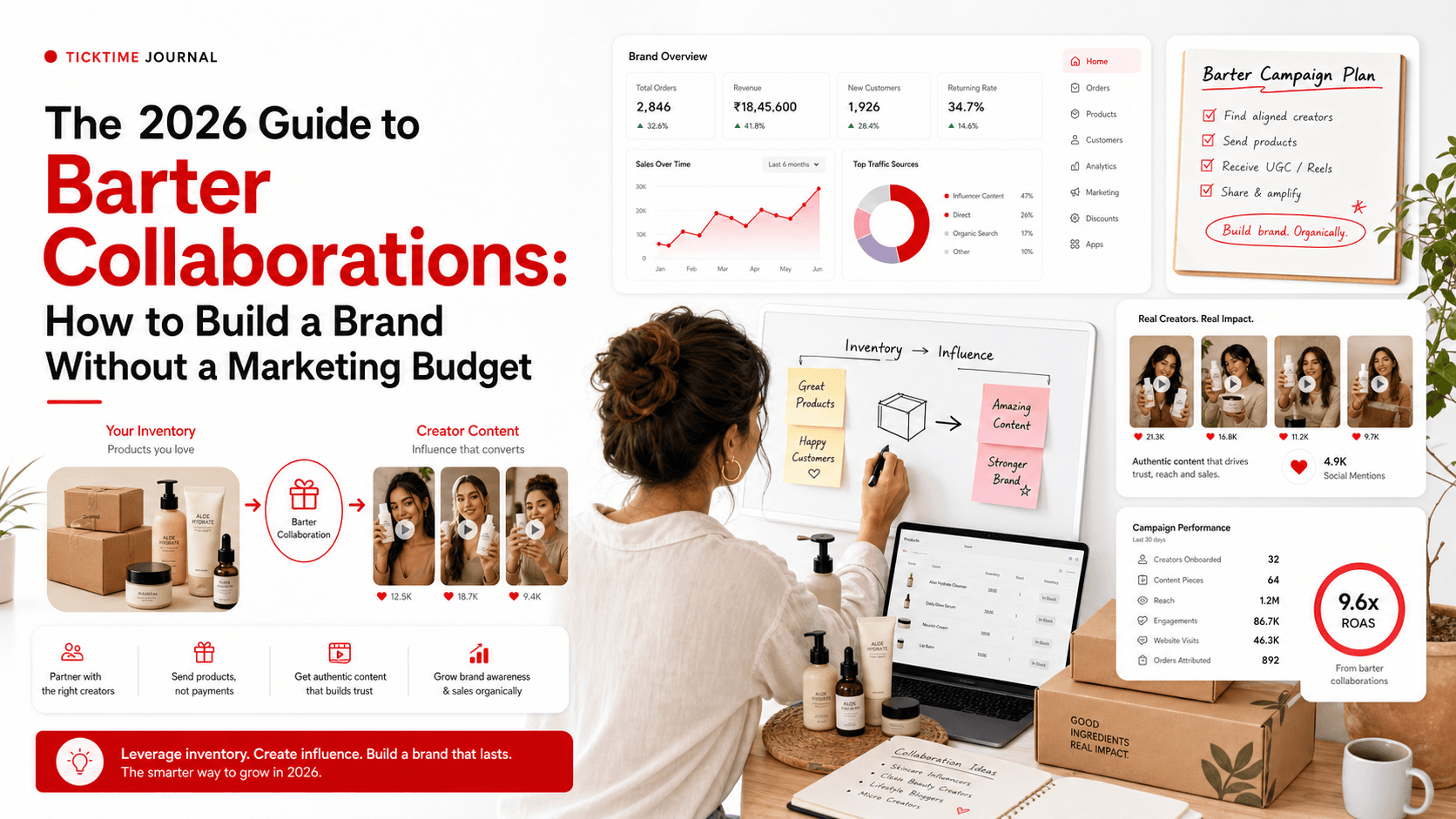
Paid ads are getting more expensive, creator fees are rising in competitive categories, and young brands are under pressure to prove every marketing rupee. That is why many D2C brands are looking again at a simple growth lever: barter collaboration.
If you searched for barter collaboration meaning, barter collab meaning, or barter collaboration with influencers, this guide is for you. We will explain what barter collaboration means, how it is different from paid collaboration, when brands should use it, and how a SaaS platform like Ticktime helps teams run barter and gifting campaigns without managing everything in Instagram DMs.
What is barter collaboration?
Barter collaboration is a non-cash influencer partnership where a brand gives a product, service, experience, or gift to a creator in exchange for agreed promotional content. That content may be an Instagram Reel, Story, YouTube Short, review, product demo, unboxing, marketplace review, or other creator-led asset.
In a paid collaboration, the brand pays a fixed creator fee. In a barter collaboration, the main consideration is the product or benefit the creator receives.
For example:
- A skincare brand sends a new serum to 30 nano and micro influencers in exchange for Reels and Stories.
- A food brand sends a trial hamper to creators who match its city and niche filters.
- A Shopify D2C brand runs gifting campaigns and later uses approved creator content as UGC on product pages.
- A brand offers product plus a small cash amount in a cash + barter collaboration when the deliverables are more demanding.
The simplest barter collaboration meaning is this: the brand trades product value for creator content and audience trust.
Barter collaboration vs paid collaboration: what is the difference?
The difference between barter and paid collaboration is not just "free vs paid." It is about risk, creator expectations, campaign control, and the type of outcome you want.
| Factor | Barter collaboration | Paid collaboration |
|---|---|---|
| Brand cost | Product cost, shipping, and operations | Creator fee plus product, shipping, and operations |
| Best for | UGC, awareness, product trials, social proof, always-on gifting | Launches, strict timelines, guaranteed deliverables, high-profile creators |
| Creator fit | Nano and micro influencers, niche creators, rising creators | Micro, mid-tier, macro, celebrities, professional creators |
| Control | Moderate, based on agreed deliverables and review flow | Higher, because creator is paid for specific outputs |
| Risk | Product may not convert into quality content unless managed well | Higher cash exposure if creator fit is wrong |
| Measurement | CPV, content approval rate, creator response rate, engagement, usable UGC | CPV, CPM, CPE, conversions, sales, reach, engagement |
Use barter when your product is desirable, easy to ship, and has enough margin to support gifting. Use paid collaboration when you need guaranteed timelines, professional scripting, usage rights, or a creator with high demand.
Many brands use both. Barter becomes the always-on engine for product discovery and creator relationships. Paid collaborations become the focused layer for launches and performance pushes.
Why barter collaboration matters for brands in 2026
Influencer marketing is no longer only about big celebrity posts. For D2C brands, especially in India, the more durable opportunity is often a network of smaller creators who speak to specific niches, cities, languages, and communities.
Barter collaboration helps because it lets brands:
- Test creators before committing to bigger paid campaigns.
- Generate product-led UGC at a lower cash cost.
- Build social proof across Instagram, YouTube, and commerce touchpoints.
- Reach nano and micro audiences that may trust creator recommendations more than polished ads.
- Learn which creator segments produce the best content before scaling budget.
This is especially useful for categories such as beauty, personal care, fashion, food, kids products, home, accessories, wellness, and lifestyle products, where creators can naturally show the product in use.
The real problem: barter campaigns become messy fast
Running one barter deal is simple. Running 50 or 100 is where the work breaks.
Brands usually struggle with:
- Finding creators who match the category, location, platform, audience, and follower range.
- Checking whether a creator has real engagement or just a large follower count.
- Sending campaign invites one by one.
- Collecting addresses for product shipping.
- Tracking whether products were shipped and delivered.
- Knowing who has accepted, submitted content, needs revision, or completed the deal.
- Reviewing content without losing files and context across DMs, email, and WhatsApp.
- Measuring whether the campaign was actually efficient.
This is where Ticktime should be positioned clearly: Ticktime is not just an influencer barter agency. Ticktime is a SaaS platform for brands to create, manage, communicate, track, and measure creator campaigns.
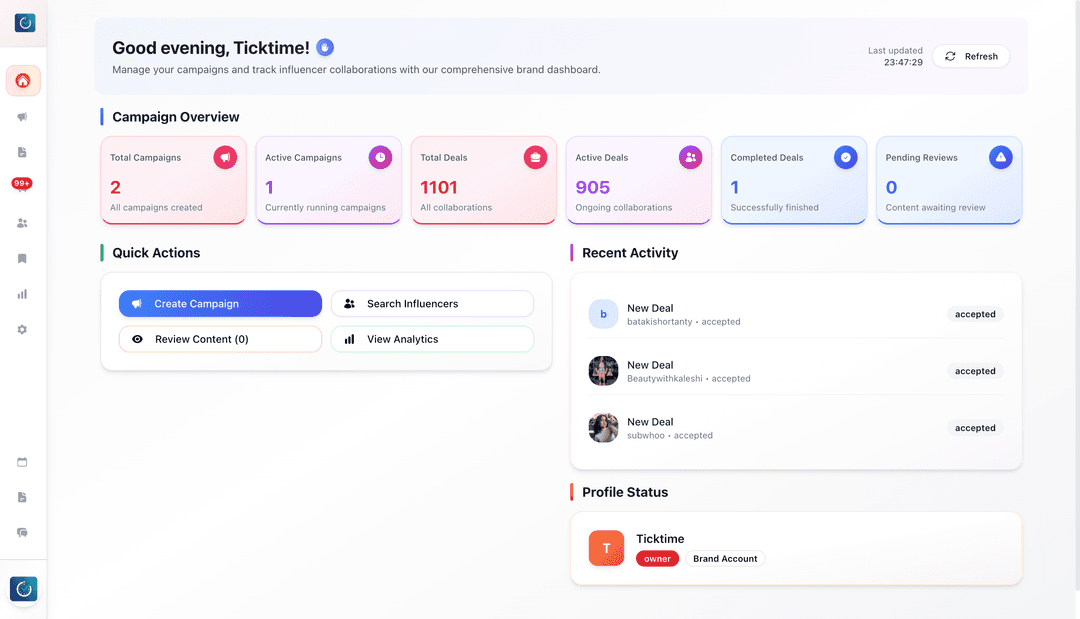
How Ticktime helps brands run barter collaboration campaigns
Ticktime is built for brands that want to manage influencer campaigns in one workflow instead of scattered spreadsheets and Instagram DMs.
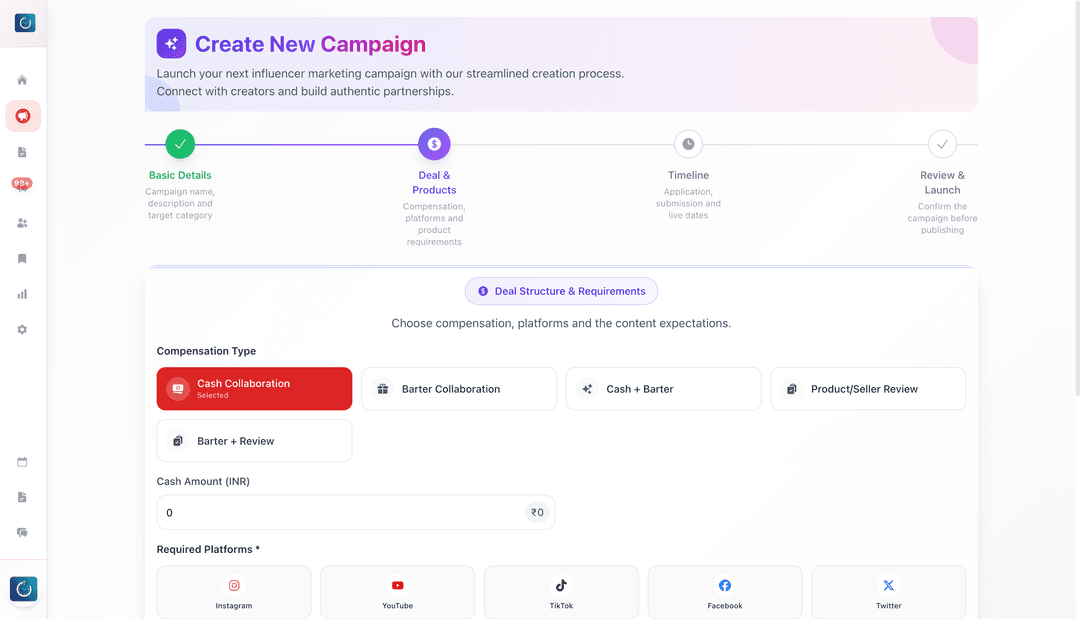
1. Create barter, paid, review, and cash + barter campaigns
Brands can create campaign briefs with title, description, objectives, platforms, content requirements, deadlines, target influencer count, product details, and audience preferences.
Ticktime supports multiple campaign types, including:
- Barter collaboration: product exchange for creator content.
- Cash collaboration: paid creator work.
- Cash + barter: product plus payment.
- Product or seller review: review-driven campaigns where the creator purchases or reviews through the required commerce flow.
- Barter + review: product-led content with review requirements.
That matters because many brands do not stay in one mode forever. A first campaign may be barter. A second campaign may become paid. A high-performing creator may move into cash + barter. Ticktime keeps these workflows in one system.
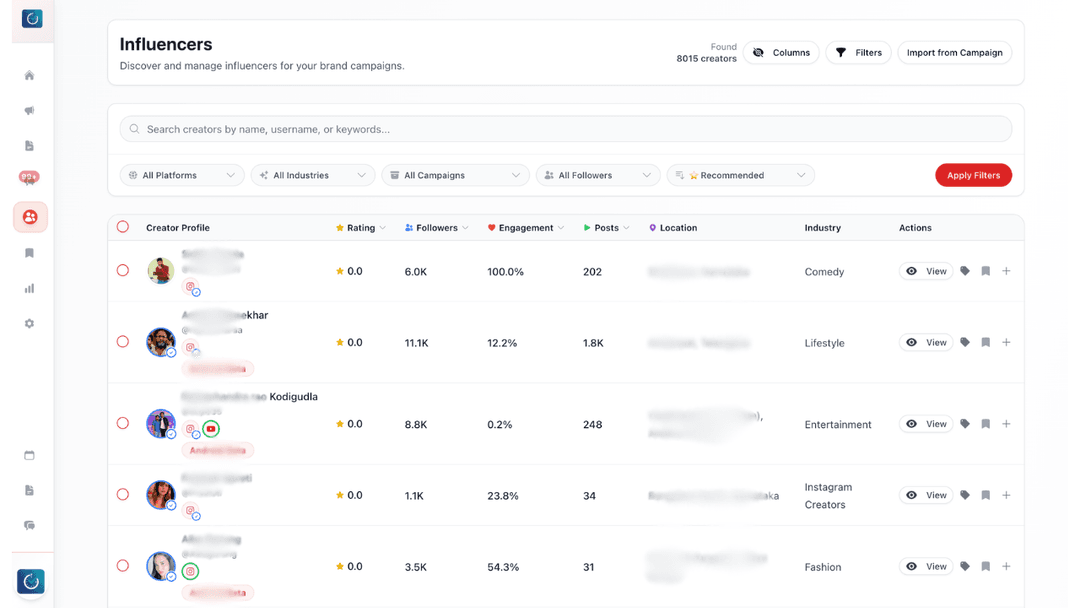
2. Discover creators using brand-relevant filters
Barter campaigns work best when the creator fit is strong. Ticktime helps brands search and filter creators by signals such as platform, location, follower range, industry, category, hashtags, collaboration preferences, and engagement-related metrics.
The goal is not to find the biggest creator. The goal is to find creators whose audience and content style make sense for your product.
For brands searching for an influencer barter collaboration platform, this is a key difference: discovery should connect directly to campaign action. On Ticktime, brands can shortlist, invite, message, and manage creators from the same campaign workflow.
3. Move creators through a clear deal workflow
The biggest risk in barter influencer marketing is operational drift. A creator accepts but never sends an address. A product is shipped but not marked delivered. Content is submitted but not reviewed. A revision request gets buried in a chat.
Ticktime gives each deal a status flow so the brand and creator know what needs to happen next.
For barter campaigns, the workflow can include:
- Invited
- Accepted
- Shortlisted
- Address requested
- Address provided
- Product shipped
- Product delivered
- Active
- Content submitted
- Under review
- Revision requested
- Approved
- Completed
This makes barter collaboration easier to manage at scale because every creator is visible inside a campaign pipeline.
4. Communicate through email and WhatsApp workflows
Barter campaigns need nudges. Creators need invitation messages, status updates, content requests, shipping updates, and completion messages.
Ticktime supports campaign communication workflows across channels such as email and WhatsApp, helping brands reduce manual follow-ups and keep creators moving through the campaign.
5. Review and approve creator content
Content review is where a barter deal becomes a usable marketing asset. Ticktime supports content submission, review, revision request, approval, and completion flows, so brands can keep campaign decisions tied to the creator and deal record.
This helps teams answer practical questions:
- Who submitted content?
- Which content is under review?
- Which creators need revisions?
- Which deals are approved or completed?
- Which creators are worth working with again?
6. Track performance and calculate CPV
Even when a campaign is barter, it is not "free." The brand still spends product cost, shipping cost, team time, and platform cost.
That is why brands should measure efficiency with metrics such as:
- Cost per view
- Cost per engagement
- Creator response rate
- Content approval rate
- Product cost per approved asset
- Reach and engagement by platform
- Repeat creator potential
Ticktime also offers a CPV calculator for Instagram influencer analysis, helping brands think in terms of media efficiency instead of follower count alone.
The basic CPV formula is:
CPV = Total campaign cost / Total viewsFor a barter campaign, "total campaign cost" should include product cost, shipping, and any additional creator payment or operational cost.
Example:
Product cost: Rs 400 x 50 creators = Rs 20,000
Shipping cost: Rs 80 x 50 creators = Rs 4,000
Total campaign cost = Rs 24,000
Total campaign views = 4,80,000
CPV = Rs 24,000 / 4,80,000 = Rs 0.05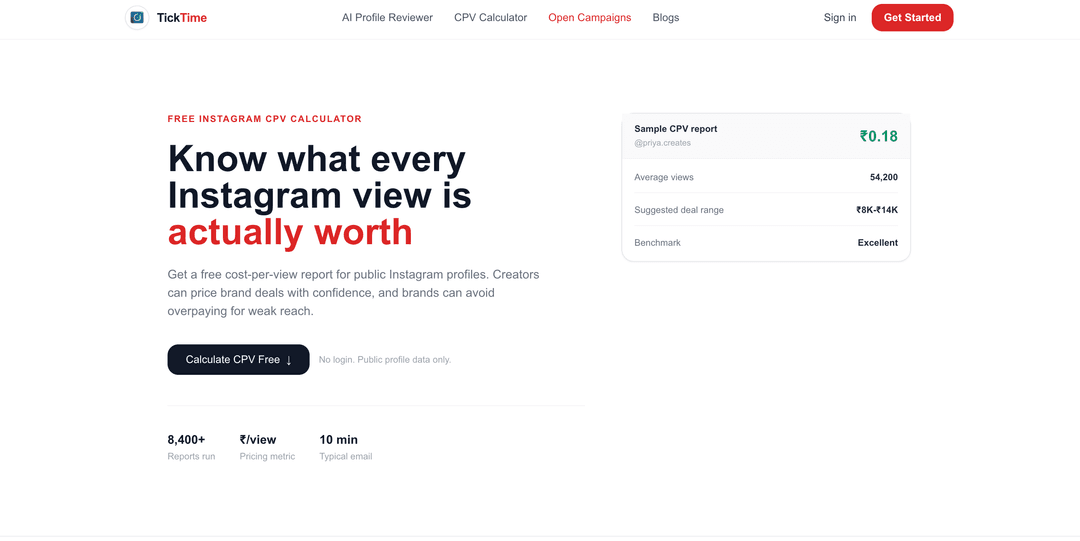
That is the kind of number a founder, growth lead, or brand manager can compare against paid ads and paid influencer campaigns.
7. Turn approved creator content into commerce proof
For D2C and Shopify brands, barter collaboration does not have to end on Instagram. Approved creator content can become UGC that supports product pages, landing pages, ads, and retargeting.
Ticktime's Shopify work includes UGC gallery tooling and affiliate tracking foundations, making it useful for brands that want creator content to support the buyer journey after the post goes live.
How to run your first barter collaboration campaign
Here is a simple structure for brands starting with barter influencer marketing.
Step 1: Choose the right product
Pick a product that is visually clear, easy to explain, and valuable enough for creators to care. Barter works better when the product feels like a genuine reward rather than a low-effort freebie.
Good barter products usually have:
- Strong visual appeal.
- Clear use case.
- Easy shipping.
- Healthy margin.
- Enough inventory.
- A natural creator story.
Step 2: Define the campaign outcome
Do not start with "we need influencers." Start with the outcome.
Examples:
- 50 Instagram Reels from beauty nano creators.
- 20 YouTube Shorts from gadget creators.
- 30 product review videos from moms in Tier-1 and Tier-2 cities.
- 100 UGC assets for later paid ad testing.
- 25 creator posts before a new product launch.
Your outcome decides the creator filters, product quantity, brief, timeline, and review process.
Step 3: Create a clear creator brief
A barter brief should be specific without sounding robotic.
Include:
- Product details.
- Campaign objective.
- Required platform.
- Content format.
- Key talking points.
- Things creators should avoid.
- Submission deadline.
- Posting requirement.
- Brand tags, hashtags, and links.
- Whether content approval is required before posting.
The clearer the brief, the less time your team spends fixing mismatched content later.
Step 4: Shortlist creators by fit, not follower count
For barter collaboration, nano and micro creators can outperform larger creators when the niche fit is strong.
Look at:
- Content quality.
- Engagement rate.
- Comment quality.
- Posting consistency.
- Location.
- Category match.
- Platform fit.
- Past collaboration behavior.
- Audience relevance.
Follower count is useful, but it should not be the only filter.
Step 5: Track every deal status
Once creators accept, treat the campaign like an operating pipeline.
Track:
- Who accepted.
- Who shared address details.
- Which products are shipped.
- Which products are delivered.
- Who submitted content.
- Which content needs revision.
- Which assets are approved.
- Which creators completed the deal.
This is the point where a SaaS platform becomes valuable. A spreadsheet can store names, but it cannot reliably run the workflow.
Step 6: Measure the real economics
After the campaign, calculate:
- Total product cost.
- Total shipping cost.
- Total views.
- Total engagement.
- Approved assets.
- Cost per approved asset.
- CPV.
- Best creator segments.
- Creators worth inviting again.
That is how barter becomes a repeatable growth system rather than a one-time gifting experiment.
Common mistakes brands make with barter collaboration
Mistake 1: Treating barter as free marketing
Barter is lower cash outlay, not zero cost. Products, shipping, coordination, and review time all have value. Measure it honestly.
Mistake 2: Inviting creators only by follower count
A creator with 8,000 engaged followers in your niche can be more useful than a broad creator with 80,000 followers and weak audience fit.
Mistake 3: Not defining deliverables
"Post about our product" is not a campaign brief. Define format, timeline, content requirements, brand tags, and approval expectations.
Mistake 4: Managing everything in DMs
DMs are fine for relationship building, but they are weak for campaign operations. Once you are managing more than a few creators, you need status tracking.
Mistake 5: Ignoring content rights
If you want to reuse creator content on your website, ads, Shopify store, or landing pages, align on usage expectations before the creator posts.
Is barter collaboration paid?
Barter collaboration is usually not cash-paid. The creator receives a product, service, experience, or gift instead of a fixed fee.
However, some campaigns are cash + barter, where the creator receives both product and payment. This is common when the brand needs higher production quality, stricter timelines, usage rights, or a creator whose usual work is paid.
Who should use barter collaboration?
Barter collaboration is a strong fit for:
- D2C brands with shippable products.
- Beauty and personal care brands.
- Fashion and accessories brands.
- Food and beverage brands.
- Home, kids, and lifestyle brands.
- Early-stage startups building social proof.
- Shopify brands that need UGC.
- Brands testing new creator segments before paid campaigns.
It may not be ideal if your product is low perceived value, hard to ship, highly regulated, or requires a professional creator with guaranteed production standards.
Why use Ticktime for barter collaboration?
Ticktime helps brands move from manual influencer gifting to a structured creator campaign system.
With Ticktime, brands can:
- Create barter, paid, review, and hybrid campaigns.
- Discover creators using filters that matter to the campaign.
- Invite and shortlist creators.
- Track addresses, shipping, delivery, content submissions, reviews, revisions, approvals, and completion.
- Communicate with creators through campaign workflows.
- Measure campaign performance and think in CPV terms.
- Use approved creator content as social proof and UGC.
- Connect creator-led growth with commerce workflows, including Shopify use cases.
In short: Ticktime helps brands turn inventory into influence, and then turn that influence into measurable creator-led growth.
FAQ: Barter collaboration meaning and brand campaigns
What does barter collaboration mean?
Barter collaboration means a brand gives a product, service, or gift to a creator in exchange for agreed promotional content or review activity. It is a non-cash creator partnership.
What is barter collab meaning on Instagram?
On Instagram, barter collab usually means a creator receives a free product and creates content such as a Reel, Story, carousel, or review post for the brand.
What is the difference between barter and paid collaboration?
In barter collaboration, the creator receives product value instead of a fixed cash fee. In paid collaboration, the creator receives a negotiated payment for specific deliverables. Some campaigns combine both as cash + barter.
Is barter collaboration good for brands?
Yes, barter collaboration can be useful for brands that have desirable products, clear deliverables, and a system to track creators. It is especially helpful for D2C brands looking for UGC, awareness, social proof, and creator testing.
How do brands find influencers for barter collaboration?
Brands can find influencers through social media search, creator referrals, manual outreach, or an influencer barter collaboration platform like Ticktime that supports discovery, filtering, invitations, and deal tracking.
What should be included in a barter campaign brief?
A barter campaign brief should include product details, content format, platform, deliverables, deadlines, brand tags, key talking points, approval process, and usage expectations.
How do you calculate CPV for barter collaboration?
CPV is calculated as total campaign cost divided by total views. For barter campaigns, include product cost, shipping cost, and any cash payment or platform cost in the total campaign cost.
Can barter collaboration become paid later?
Yes. Many brands start with barter to test creator fit, then move high-performing creators into paid or cash + barter campaigns.
Start your first barter collaboration campaign with Ticktime
Barter collaboration is not just a budget workaround. Done well, it is a repeatable way to build awareness, collect UGC, test creator fit, and create trust around your product.
If your brand is ready to move beyond scattered DMs and spreadsheets, Ticktime gives you the SaaS workflow to discover creators, run campaigns, manage deals, review content, and measure results.
Create your brand campaign on Ticktime and start turning product inventory into creator-led growth.