If you are a nano influencer, micro influencer, YouTuber, Instagram creator, or UGC creator, you have probably seen words like barter collab, paid collaboration, brand deal, influencer gifting, and open campaigns everywhere.
But what does barter collaboration actually mean for creators? Is barter collaboration paid? How do you find brands looking for micro influencers? And how can Ticktime, also searched as Ticktime media, or TickTime, help you get better creator campaigns without waiting forever for random DMs?
This guide explains the barter collaboration meaning from the influencer side, how barter and paid brand collaborations work, and how creators can use Ticktime to discover open campaigns, manage deals, and build a stronger creator profile.
What does barter collaboration mean?
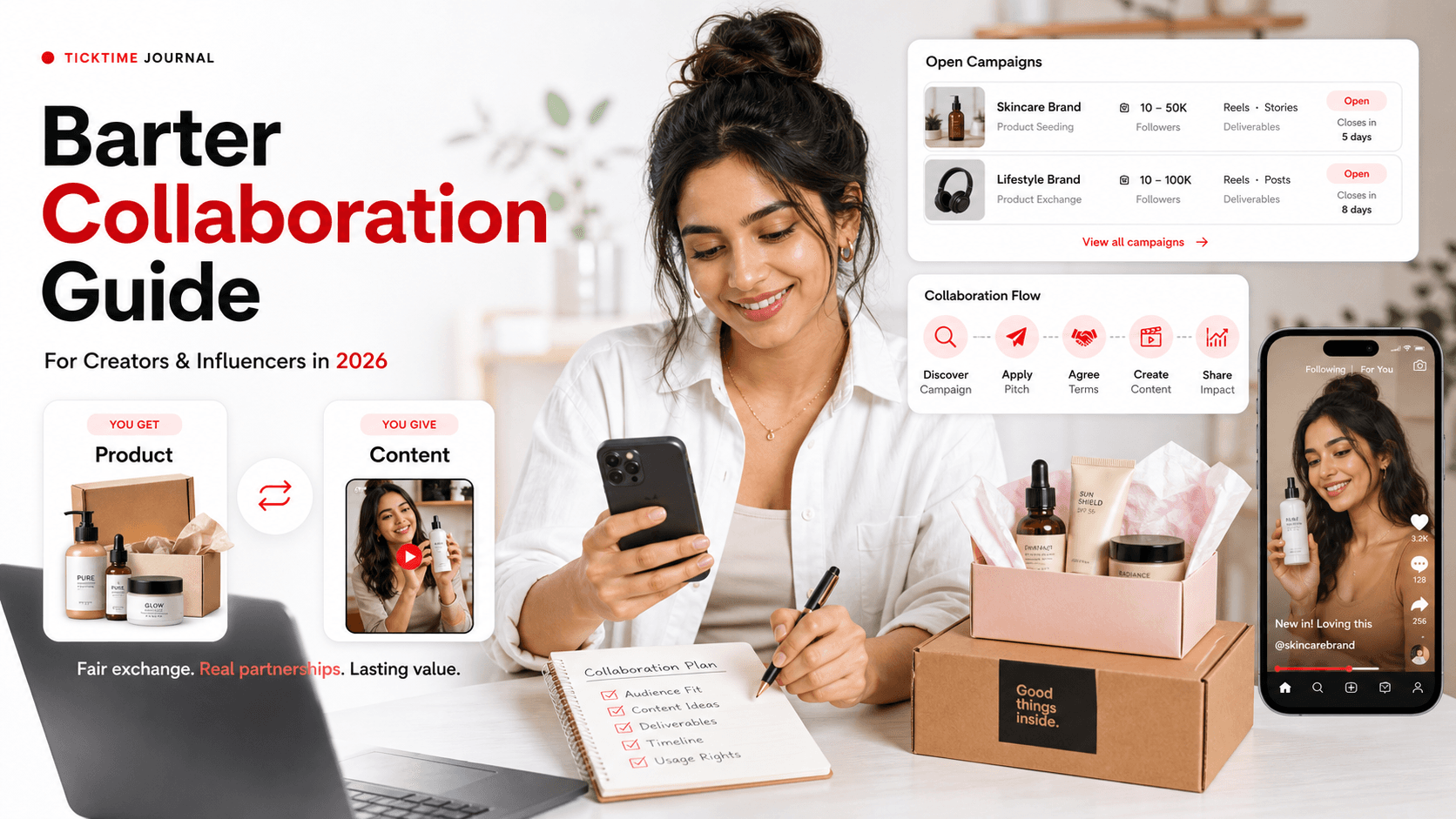
Barter collaboration is a product-for-content partnership between a brand and a creator. Instead of paying a fixed cash fee, the brand sends a product, service, experience, or gift. In exchange, the creator makes agreed content such as an Instagram Reel, Story, carousel post, YouTube Short, product review, unboxing, or UGC video.
In simple words, barter collaboration means:
Brand gives product value
Creator gives content value
For example, a creator may receive a skincare kit, teeth whitening strips, a water flosser, a hair oil, a lunch box, a perfume, a towel, or another product that fits their content niche. In return, the creator shares honest content based on the campaign brief.
This is why people search for terms like barter collab meaning, barter collab means, barter deal influencer, influencer barter, and barter collaboration on Instagram. They are all describing the same idea: a creator receives product value instead of direct cash.
Is barter collaboration paid?
Barter collaboration is usually not paid in cash. You receive the product, gift, service, or experience instead of a fixed fee.
However, there are three common collaboration types creators should understand:
| Collaboration type | What the creator receives | Best for |
|---|---|---|
| Barter collaboration | Product, service, gift, or experience | New creators, nano influencers, product reviews, portfolio building |
| Paid collaboration | Cash payment for agreed deliverables | Creators with strong reach, niche authority, or proven content quality |
| Cash + barter collaboration | Product plus cash payment | Campaigns with more work, stricter timelines, or higher creator value |
So if you are asking, "what is paid and barter collaboration?" the answer is simple: paid means money, barter means product value, and cash + barter means both.
Why creators should care about barter deals
A barter deal is not automatically a good deal. Some are worth it. Some are not. The difference comes down to product value, brand fit, content effort, timeline, and whether the campaign helps your creator career.
Good barter campaigns can help creators:
- Build a real brand collaboration portfolio.
- Create fresh content without buying every product themselves.
- Show future brands that they can follow briefs and deliver on time.
- Turn product reviews into content that attracts organic followers.
- Start relationships that may later become paid brand deals.
- Learn how campaigns work before negotiating bigger paid collaborations.
For early creators, barter is often the first step toward paid campaigns for influencers. A small creator with clean content, a clear niche, and reliable delivery can become more valuable to brands than a larger account with messy communication.
When should you accept a barter collaboration?
Before accepting any barter campaign, ask yourself these questions:
- Do I genuinely like the product or category?
- Does the product match my audience?
- Is the product value fair for the content effort?
- Are the deliverables clear?
- Can I create good content before the deadline?
- Will this collaboration improve my profile or portfolio?
- Is the brand clear about usage expectations if they want to reuse my content?
If the answer is yes, a barter deal can be useful. If the product does not fit your niche, the deadline is unrealistic, or the brand expects too many deliverables for low value, it is okay to skip it.
Barter collaboration vs paid collaboration: what is the difference for creators?
The difference between paid and barter collaboration matters because it affects how you value your time.
- Barter collaboration: you are paid through product value, not direct cash.
- Paid collaboration: you receive a creator fee for your content, reach, production work, or influence.
- Cash + barter: you receive both product and money.
If you are new, barter can help you build proof. If you already have strong engagement, good video quality, and consistent content, you can start setting a minimum collaboration amount for paid work.
A simple rule: barter is good for learning and portfolio building; paid collaborations are good when your content quality, niche, and audience are already creating measurable value for brands.
What is Ticktime for creators?
Ticktime is a creator campaign platform where influencers can discover open campaigns, manage brand deals, complete their profile, connect social accounts, and track collaboration progress in one place.
Instead of relying only on Instagram DMs, creators can use Ticktime to see campaign opportunities and handle the full deal workflow more professionally.
For creators, Ticktime helps with:
- Finding open campaigns from brands.
- Managing invited campaigns and accepted deals.
- Setting collaboration preferences such as barter, cash, and cash + barter.
- Adding social accounts like Instagram and YouTube.
- Showing profile completion and campaign readiness.
- Tracking active, submitted, approved, and completed collaborations.
- Submitting addresses, content, and campaign updates inside a deal flow.
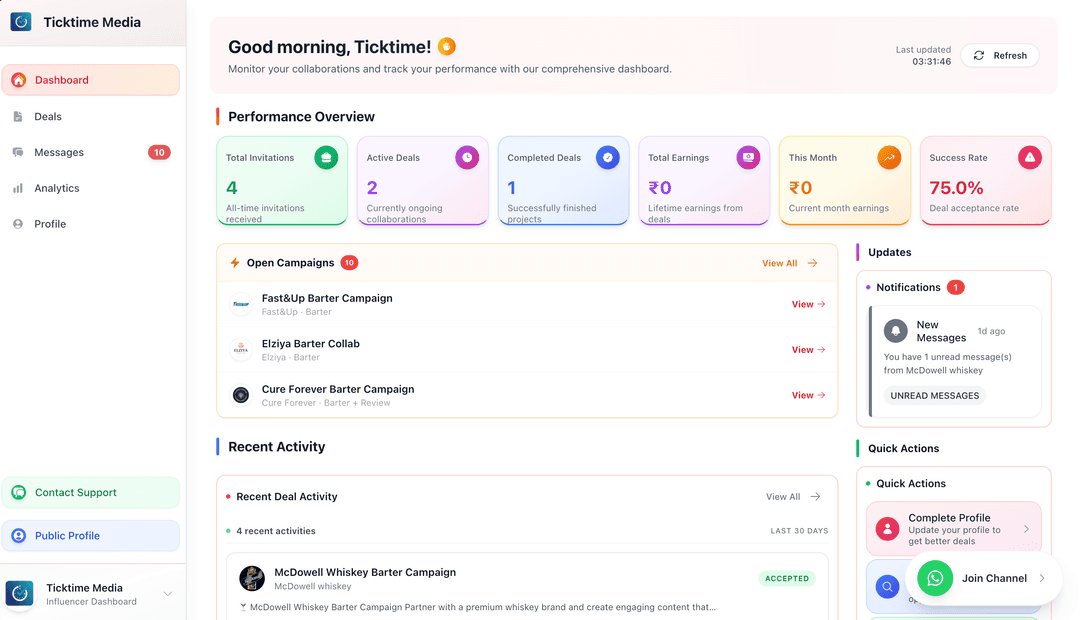
- Checking performance overview and recent activity from the creator dashboard.
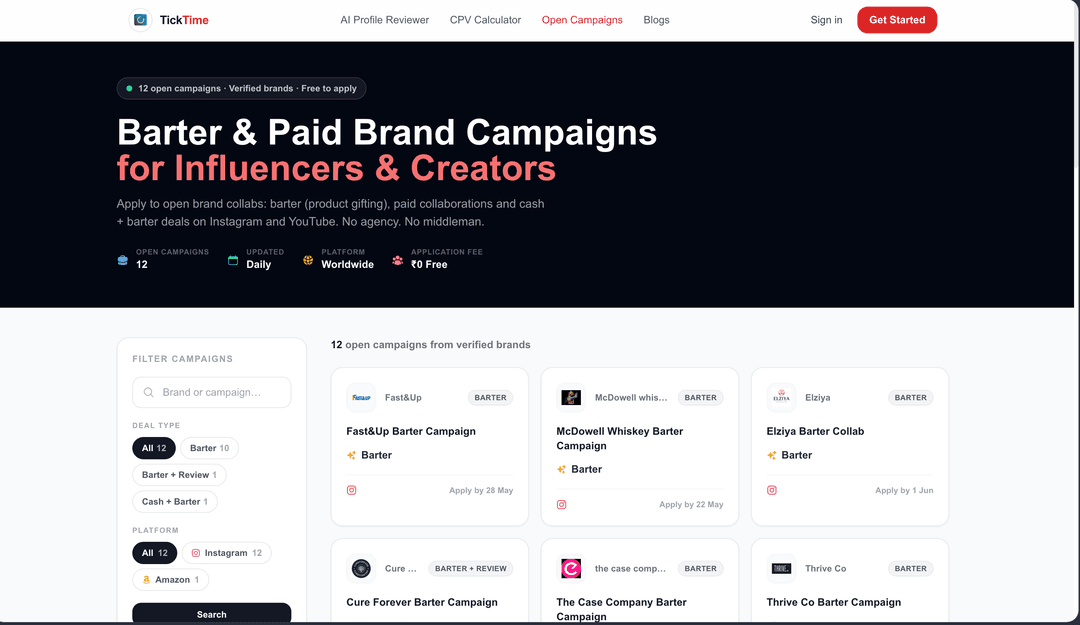
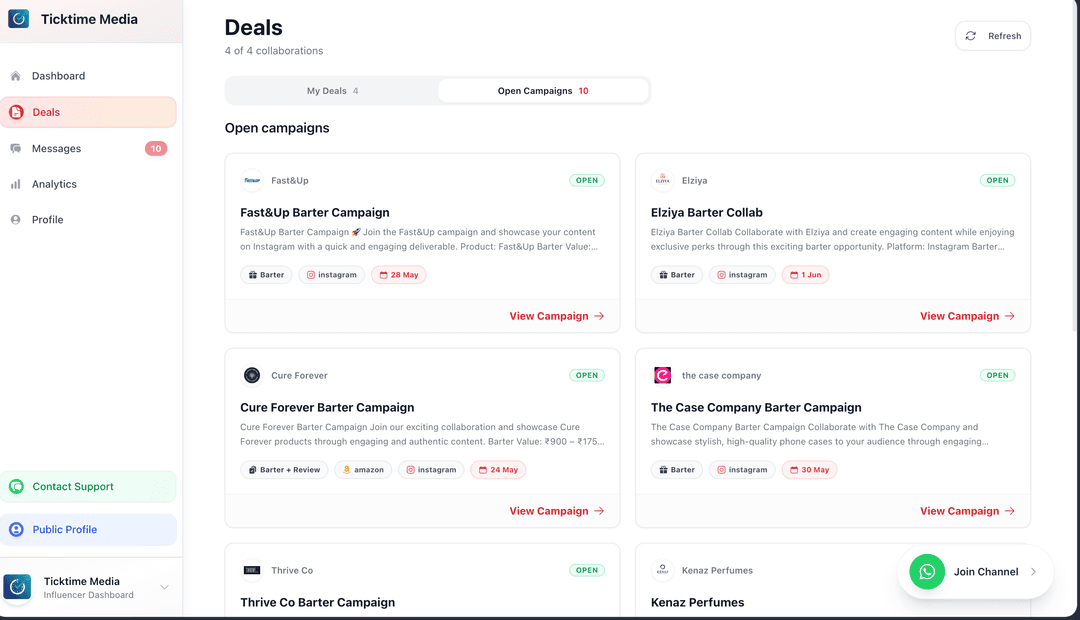
How Ticktime open campaigns work
Open campaigns are public or available campaigns that eligible creators can view from the Ticktime creator dashboard. These may include barter campaigns, paid campaigns, cash + barter campaigns, review campaigns, or brand campaigns for influencers across different platforms.
Here is the simple flow:
- Create your creator account: Sign up on Ticktime and complete your basic profile.
- Add your social accounts: Connect or add Instagram, YouTube, and other relevant profiles so brands can understand your creator presence.
- Set campaign readiness: Mark whether you are campaign ready, barter ready, commerce ready, and available for cash, barter, or cash + barter collaborations.
- Browse open campaigns: Go to the Open Campaigns tab to see active opportunities from brands.
- View campaign details: Check the brand, product, platform, content requirements, deadline, and deal type.
- Apply or accept when relevant: If the campaign fits your niche and audience, move forward with it.
- Track it in My Deals: Once accepted, the collaboration appears in your deals workflow.
- Complete each step: Provide your address if needed, wait for product shipment, submit content, handle revisions, and complete the campaign.
This is useful for creators searching for campaigns for influencers, brand deals for influencers, paid campaigns for influencers, influencer gifting campaigns, and brands looking for micro influencers.
What happens after you accept a campaign?
After you accept a campaign on Ticktime, the deal moves through a structured workflow. This helps both the creator and brand know what needs to happen next.
For a barter campaign, the deal may move through steps such as:
- Invited
- Accepted
- Shortlisted
- Address requested
- Address provided
- Product shipped
- Product delivered
- Active
- Content submitted
- Under review
- Revision requested
- Approved
- Completed
This is a major advantage over scattered DMs. You do not have to guess whether the brand saw your message, whether the product has been shipped, or whether your content is under review. The collaboration has a visible status.
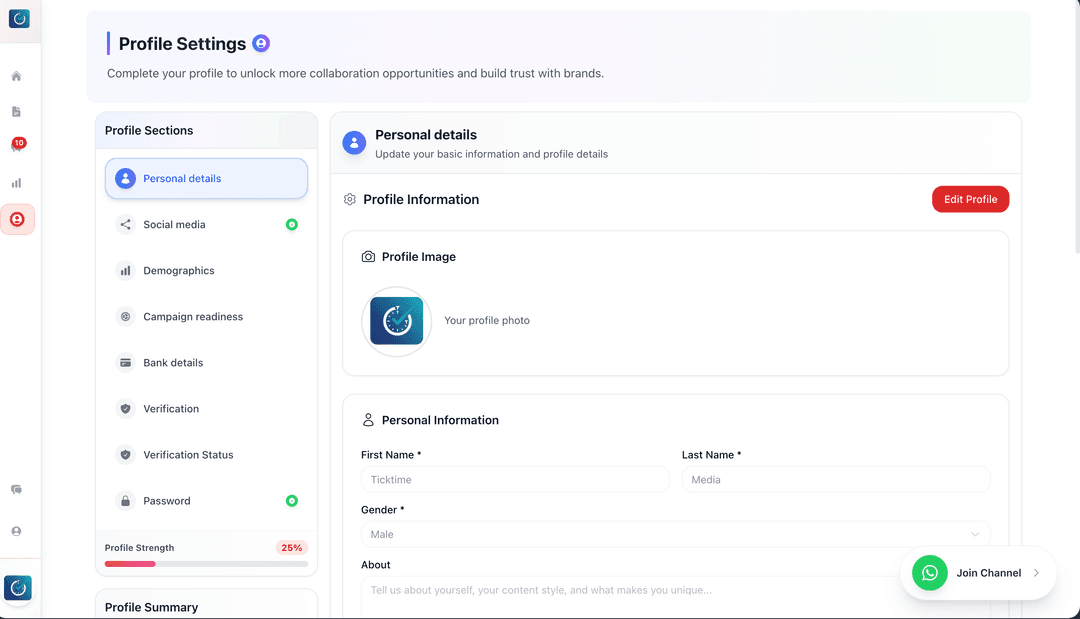
How to make your Ticktime profile attractive to brands
Brands do not choose creators only by follower count. They look for relevance, content quality, responsiveness, profile clarity, and whether your audience fits the campaign.
To improve your chances of getting brand collaborations on Ticktime:
- Complete every profile section instead of leaving blank fields.
- Add your real creator niche and content categories.
- Connect your Instagram or YouTube profile where relevant.
- Keep your profile image, bio, location, and social links updated.
- Set your collaboration types honestly: barter, cash, or cash + barter.
- Add your minimum collaboration amount if you are open to paid work.
- Set your response time and availability accurately.
- Accept campaigns only when you can deliver quality work before the deadline.
How to get brand deals as an influencer
If you are searching for how to collaborate with brands as an influencer or how to get brand deals as an influencer, start with the basics. Brands want creators who make their job easier.
1. Pick a clear niche
A creator who posts beauty, food, fashion, skincare, parenting, fitness, or tech content consistently is easier for brands to understand than a creator with no clear category.
2. Make content that shows products naturally
Practice product-led formats such as unboxing, first impressions, before-and-after videos, reviews, tutorials, comparison videos, and daily routine content.
3. Improve your engagement quality
Brands care about more than followers. Comments, saves, shares, watch time, and audience trust matter. A smaller creator with strong engagement can win better campaigns than a bigger account with weak audience response.
4. Use open campaigns instead of waiting for DMs
Waiting for brands to find you can be slow. Open campaigns on Ticktime help creators discover active opportunities from brands already looking for influencers.
5. Deliver like a professional
Submit content on time, follow the brief, communicate clearly, and handle revisions politely. Good delivery is what turns one barter collaboration into repeat paid brand collaborations.
How to decide if a barter deal is worth it
Not every gift campaign is worth your time. Use this simple creator checklist before accepting a barter deal:
| Question | Why it matters |
|---|---|
| Would I use this product even without a campaign? | Your content will feel more natural if the product fits you. |
| Does my audience care about this category? | Audience fit affects engagement and future brand interest. |
| Is the product value fair for the work? | A high-effort video may not be worth a low-value gift. |
| Are deliverables and deadlines clear? | Clear briefs protect your time. |
| Can this become a paid relationship later? | Some barter deals are valuable because they open better future campaigns. |
What about CPV and influencer rates?
As you grow, you should understand your value. Brands often think about creator performance using metrics like CPV, CPM, engagement rate, reach, and content quality.
CPV means cost per view. A simple CPV formula is:
CPV = Campaign cost / Total viewsFor creators, this helps you understand why brands may offer barter, cash + barter, or paid collaboration. If your videos consistently get strong views and engagement in a specific niche, your value increases.
You do not need to obsess over every number when you are starting. But learning how brands measure campaigns will help you negotiate better over time.
Advantages of Ticktime for creators
Ticktime is designed to make creator-brand collaboration more organized. The biggest advantage is that creators can move from random DMs to a clearer campaign workflow.
Key advantages include:
- Open campaigns: Discover active opportunities from brands instead of waiting for DMs.
- My Deals: Track invited, accepted, active, submitted, approved, and completed collaborations.
- Campaign readiness: Tell brands whether you are open to barter, cash, or cash + barter collaborations.
- Profile completion: Build a profile that helps brands understand your niche, reach, and collaboration fit.
- Social account linking: Add Instagram, YouTube, and other profiles to showcase your creator presence.
- Clear deal steps: Know when to share an address, wait for shipment, submit content, or respond to a revision.
- Dashboard overview: Monitor invitations, active deals, completed deals, earnings, and recent activity.
- Professional communication: Keep campaign context connected to the deal instead of scattered across chats.
Common mistakes creators make with barter collaborations
Mistake 1: Accepting every free product
Free products are not always worth it. If the product does not fit your niche, it can confuse your audience and weaken your profile.
Mistake 2: Ignoring the brief
A brand deal is not just a casual post. Read the platform, format, content requirements, deadline, hashtags, and approval instructions carefully.
Mistake 3: Posting late
Late delivery can reduce your chance of future paid collaborations. If you cannot meet a deadline, communicate early.
Mistake 4: Not setting collaboration preferences
If you are open to barter, cash + barter, or paid work, make it clear in your creator profile. Brands need to know what kind of campaigns fit you.
Mistake 5: Treating barter as less professional
Barter may not be cash-paid, but it is still a brand collaboration. Professional delivery can lead to better campaigns later.
FAQ: Barter collaboration for influencers
What is barter collaboration for influencers?
Barter collaboration for influencers is a product-for-content deal where a brand gives a product, gift, service, or experience in exchange for creator content.
What does barter collab mean on Instagram?
On Instagram, barter collab means a creator receives a free product or gift and creates content such as a Reel, Story, post, carousel, or review for the brand.
Is barter collaboration paid?
Barter collaboration is usually not paid in cash. The creator receives product value. Some campaigns are cash + barter, where the creator receives both product and payment.
How do I find campaigns for influencers?
You can find campaigns through brand outreach, influencer gifting platforms, creator communities, or open campaigns on Ticktime.
How do I get paid brand collaborations?
Build a clear niche, improve content quality, complete your creator profile, show past brand work, respond quickly, and deliver reliably. Many creators start with barter deals and later move to paid campaigns.
Is Ticktime only for barter deals?
No. Ticktime supports creator workflows for barter, paid, cash + barter, review, and brand campaigns depending on what the brand creates and what the creator is eligible for.
Can nano and micro influencers use Ticktime?
Yes. Ticktime is useful for nano influencers, micro influencers, and growing creators who want to discover brand campaigns and manage collaborations professionally.
What should I do before applying to open campaigns?
Complete your profile, add social accounts, set campaign readiness, choose your collaboration preferences, and make sure the campaign fits your content niche.
Start finding creator campaigns on Ticktime
Barter collaboration can be a smart first step for creators, but it works best when you treat it professionally. Choose campaigns that fit your niche, understand the value exchange, submit strong content, and use each campaign to build your creator portfolio.
Ticktime helps creators move from random DMs to organized brand collaborations. With open campaigns, My Deals, profile completion, campaign readiness, social account linking, and clear deal tracking, you can manage your creator journey with more confidence.
Sign up on Ticktime, complete your creator profile, and start exploring open campaigns from brands looking for creators like you.