

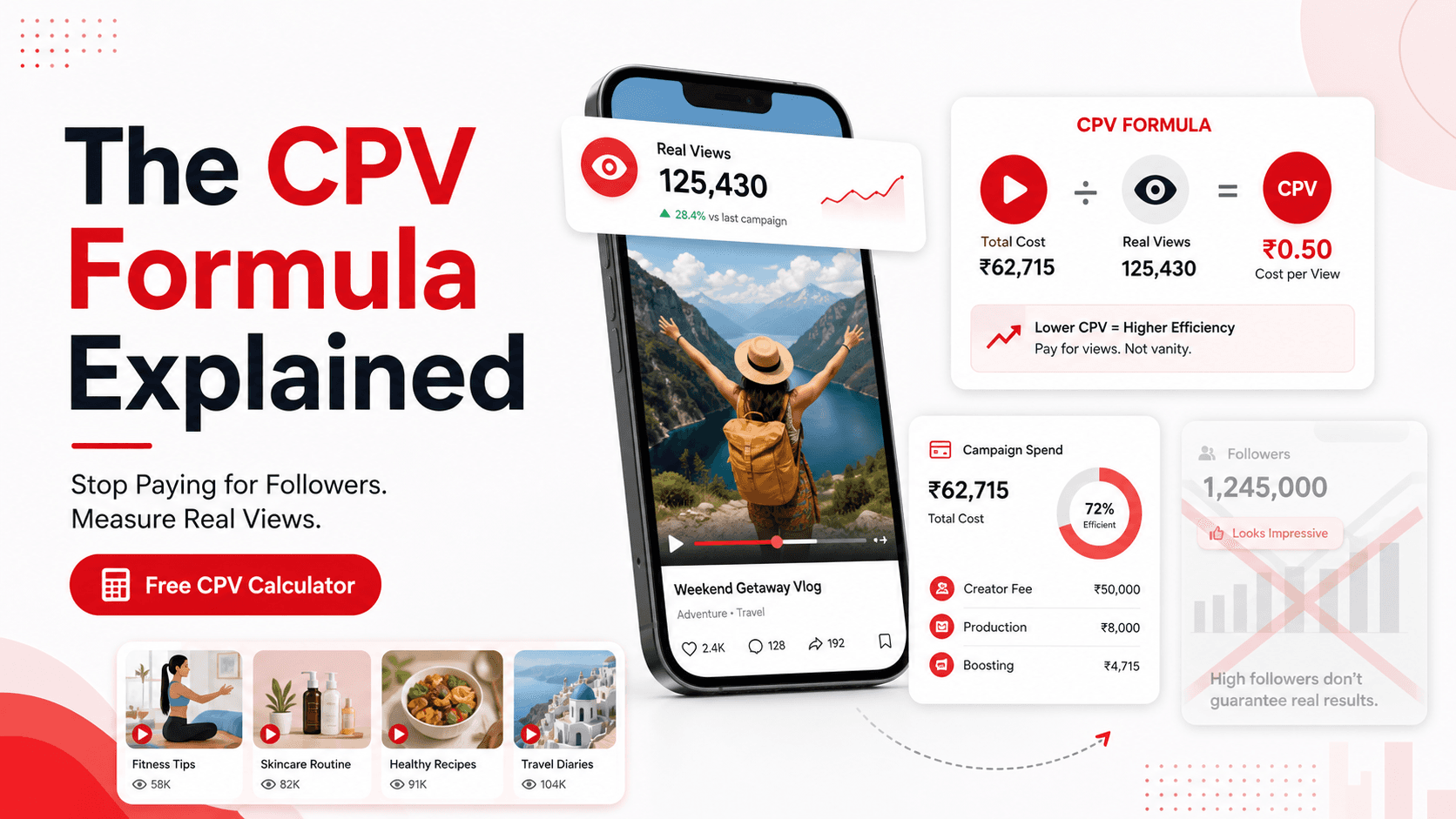
Follower count is the most visible influencer metric, but it is also one of the easiest numbers to misunderstand. A creator with 300K followers can deliver fewer useful views than a creator with 30K followers. A page can look big, but still have weak engagement, inflated followers, fake comments, or poor audience fit.
That is why brands should stop asking only, "How many followers does this influencer have?" and start asking, "What will each real view cost us?"
The answer comes from the CPV formula.
CPV means cost per view. In influencer marketing, CPV helps brands compare creator quotes against expected video views, especially for Instagram Reels, YouTube Shorts, TikTok videos, and short-form branded content.
If you are reviewing an influencer rate card, use Ticktime's free Instagram CPV calculator before you approve the deal.
What is CPV in influencer marketing?
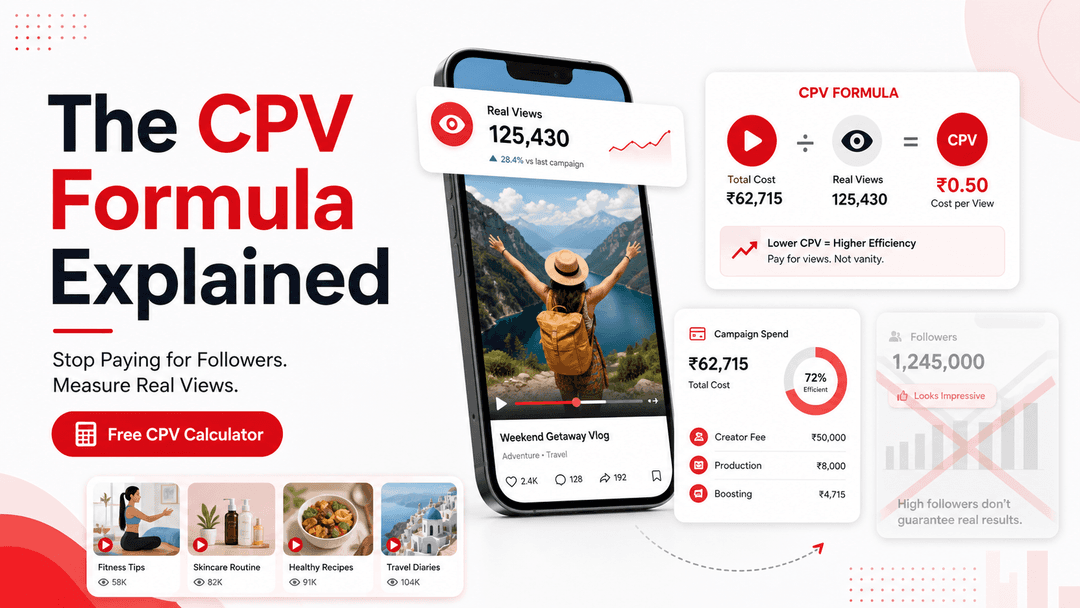
CPV, or cost per view, is the amount a brand pays for each view generated by a creator campaign. It is a simple media efficiency metric that helps brands compare influencers beyond follower count.
The basic CPV formula is:
CPV = Total campaign cost / Total viewsFor influencer marketing, you can use:
Influencer CPV = Creator fee / Expected content viewsIf the campaign includes product cost, shipping, agency cost, or paid usage rights, include those in total campaign cost:
True CPV = Creator fee + product cost + shipping + usage rights / Total viewsFor cleaner math, write it like this:
True CPV = Total campaign investment / Total viewsCPV formula example for Instagram Reels
Imagine two creators quote your brand for one Instagram Reel.
| Creator | Followers | Fee | Average Reel views | CPV |
|---|---|---|---|---|
| Creator A | 250K | Rs 50,000 | 25,000 | Rs 2.00 |
| Creator B | 45K | Rs 25,000 | 1,00,000 | Rs 0.25 |
Creator A has more followers, but Creator B is much more efficient on views. If your goal is awareness, Creator B may be the better buy even with a smaller follower base.
This is the core reason brands should not pay blindly for followers. Followers are an audience size signal. Views are closer to actual campaign delivery.
Why follower count became a bad buying metric
Follower count used to be the easiest way to compare creators. In 2026, it is no longer enough. Algorithms do not show every post to every follower, and bought followers can make an account look bigger while lowering real engagement.
Follower count can mislead brands because:
- Many followers may be inactive.
- Some followers may be bots or purchased accounts.
- Audience location may not match your target market.
- Reels can reach non-followers, so followers are not the full distribution base.
- A creator may have viral old content but weak current performance.
- Sponsored posts may perform worse than organic posts.
- Large creators can have lower engagement rates than niche micro creators.
A creator's follower count tells you how big the account looks. CPV tells you how efficiently the campaign may buy attention.
Why buying followers destroys influencer marketing ROI
Buying followers creates a vanity number, not a real audience. For creators, it can damage credibility. For brands, it can lead to wasted campaign budgets.
Fake or low-quality followers hurt influencer campaigns in five major ways:
1. Bought followers do not watch content
If a creator has purchased followers, many of those accounts will not view Reels, click links, reply to Stories, comment, save, share, or buy. Your brand is paying for an audience that may not exist in any useful sense.
2. Engagement rate drops
When follower count rises but likes, comments, saves, shares, and views do not rise with it, engagement rate falls. This makes the account look weaker to brands and can reduce organic distribution.
3. Algorithm performance can weaken
Social platforms reward content that gets real interaction. If a creator's follower base ignores the content because many followers are inactive or fake, the content may struggle to reach more people.
4. Brand trust gets damaged
Consumers and marketers can often spot suspicious accounts: strange follower spikes, bot-like comments, low views compared with followers, and inconsistent audience quality. If a brand partners with creators who inflate numbers, the brand can look careless too.
5. CPV becomes expensive
Fake followers make rate cards look inflated. A creator may charge based on 200K followers, but if the Reel gets only 8,000 real views, your CPV can become far worse than expected.
Follower pricing vs CPV pricing
Many brands still make this mistake:
"This creator has 500K followers, so Rs 2L is fine."That is follower pricing. It assumes the follower count will translate into campaign delivery. Often, it does not.
CPV pricing asks a better question:
"If we pay Rs 2L, how many real views are we likely to get?"| Buying approach | What it focuses on | Risk |
|---|---|---|
| Follower-based pricing | Account size | Overpaying for inactive, fake, or unreachable followers |
| Engagement-based pricing | Likes, comments, saves, shares | Can miss view efficiency or audience quality |
| CPV-based pricing | Cost per expected view | Needs accurate average view data |
The best evaluation uses all three, but CPV should be part of every video campaign decision.
How to calculate CPV before paying an influencer
Before approving an influencer quote, collect four numbers:
- The creator's quoted fee.
- The creator's average views across recent similar content.
- Any additional cost such as product, shipping, usage rights, or agency fees.
- Your acceptable CPV range for the campaign objective.
Then calculate:
CPV = Total campaign investment / Expected viewsExample:
Creator fee: Rs 60,000
Product + shipping: Rs 5,000
Total campaign investment: Rs 65,000
Expected Reel views: 1,30,000
CPV = Rs 65,000 / 1,30,000
CPV = Rs 0.50 per view
Now you can compare that against other creators, paid ads, past influencer campaigns, and your brand's conversion economics.
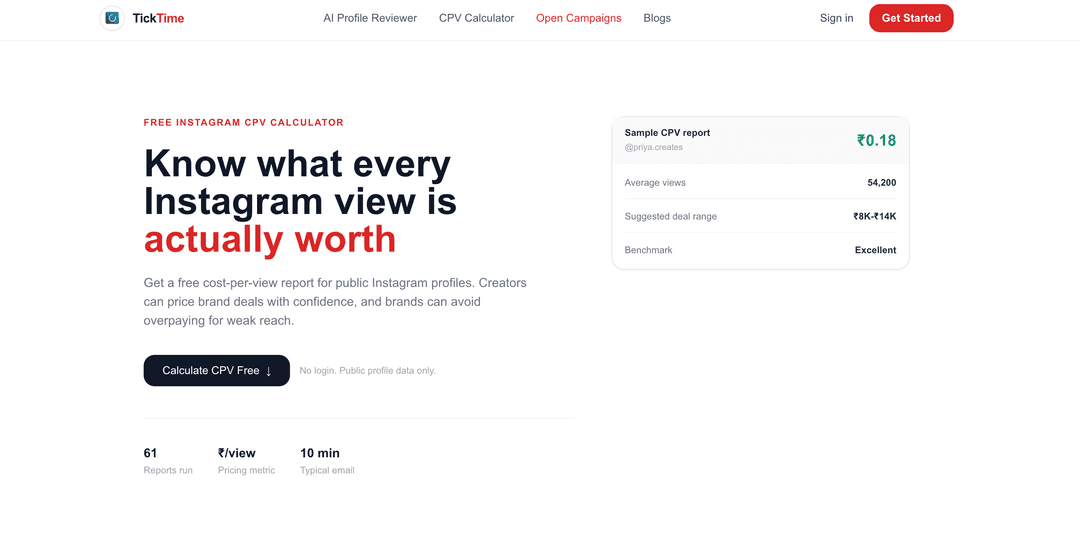
Calculate this instantly with Ticktime's free CPV calculator.
What is a good CPV for influencer marketing?
There is no universal "good CPV" because campaign goals and categories vary. A beauty brand selling a Rs 499 product may need a much lower CPV than a finance, auto, health tech, or premium electronics brand. A campaign designed for awareness may tolerate a different CPV than one built for conversions.
Use this simple interpretation:
- Low CPV: Efficient for awareness, but still check audience quality.
- Medium CPV: Acceptable if the creator has strong fit, trust, or conversion potential.
- High CPV: Needs a strong reason, such as premium niche, high buyer intent, excellent content quality, or valuable usage rights.
Do not chase the lowest CPV blindly. A cheap view from the wrong audience is still wasted money. The goal is efficient attention from the right audience.
How CPV helps brands compare creators fairly
CPV makes influencer pricing easier to compare because it normalizes different creator quotes into one simple metric.
It helps brands answer:
- Is this creator overpriced for their average views?
- Is a micro influencer more efficient than a macro influencer?
- Should we choose one large creator or ten smaller creators?
- Are we paying extra for niche authority or only follower count?
- Does this creator's rate card make sense for our campaign budget?
- Can we negotiate a better package based on expected views?
For brands running Instagram Reel campaigns, CPV is one of the fastest ways to avoid expensive vanity buys.
CPV is not the only metric, but it is the first filter
CPV should not be the only number in your influencer marketing decision. A creator with a slightly higher CPV may still be worth it if they have stronger brand fit, better storytelling, high trust, or an audience that converts.
After CPV, also check:
- Engagement rate.
- Comment quality.
- Audience location.
- Audience age and gender fit.
- Content consistency.
- Past sponsored post performance.
- Creative quality.
- Category authority.
- Usage rights and exclusivity terms.
Think of CPV as your first financial filter. Once the number makes sense, evaluate the creative and audience fit.
How brands can spot follower inflation before paying
You do not need a complicated audit to catch the obvious warning signs. Before paying a creator, look for:
- Very high followers but very low Reel views.
- Sudden follower spikes with no viral content explaining the growth.
- Comments that look generic, repeated, or unrelated to the post.
- Audience location that does not match your target geography.
- Sponsored posts with much weaker performance than organic posts.
- A creator who cannot explain their average views or audience basics.
- A rate card based only on followers, with no view or engagement context.
If several of these appear together, do not approve the quote until you calculate CPV and review audience quality.
CPV for barter collaborations
CPV is useful even when you are not paying cash. A barter campaign still has a cost: product cost, shipping cost, team time, and sometimes platform or agency cost.
For barter campaigns, calculate:
Barter CPV = Product cost + shipping cost + operational cost / Total viewsExample:
Product cost: Rs 800
Shipping cost: Rs 100
Operational cost: Rs 100
Total campaign cost: Rs 1,000
Views generated: 20,000
Barter CPV = Rs 1,000 / 20,000
Barter CPV = Rs 0.05 per view
This lets brands compare barter campaigns with paid influencer campaigns and paid ads. "Free product" is not free marketing. CPV gives you the real number.
CPV formula FAQ
What is the CPV formula?
The CPV formula is total campaign cost divided by total views. In influencer marketing, brands often calculate CPV as creator fee divided by expected views.
What is CPV in influencer marketing?
CPV in influencer marketing means cost per view. It shows how much a brand pays for each expected or delivered view from a creator's content.
How do you calculate CPV for Instagram Reels?
Divide the influencer fee or total campaign investment by the creator's expected Reel views. For example, Rs 20,000 divided by 1,00,000 views equals Rs 0.20 CPV.
Why should brands stop paying for followers?
Followers do not guarantee reach, engagement, views, or sales. Brands should evaluate average views, audience quality, engagement, and CPV before paying for influencer campaigns.
Do fake followers increase CPV?
Yes. Fake followers can inflate a creator's quoted value without increasing real views. If the brand pays based on followers but the content gets low views, CPV becomes expensive.
Is low CPV always good?
Not always. Low CPV is useful, but only if the views come from the right audience. Brands should combine CPV with audience fit, engagement quality, and content quality.
Can CPV be used for barter campaigns?
Yes. Add product cost, shipping, and operational cost, then divide by total views. This shows the real media efficiency of a barter collaboration.
Final takeaway: buy real attention, not inflated audience size
Influencer marketing works when brands pay for real attention, trusted recommendations, and content that reaches the right audience. It fails when brands pay for inflated follower counts without checking views, engagement, or audience quality.
The CPV formula gives your team a simple reality check before every influencer deal:
CPV = Total campaign investment / Total viewsBefore approving your next creator quote, calculate the real cost per view.
Use Ticktime's free CPV calculator to check whether an influencer is worth the price before you spend your campaign budget.